پروژه رقص نور با میکروکنترلر avrدر مطلب پروژه رقص نور با میکروکنترلر avr قراره چند نوع الگوریتم برای راه اندازی LED های متصل شده به یک پورت کامل رو باهم بررسی کنیم و کد براشون بنویسیم. پروژه رقص نور با میکروکنترلر AVR ATmega32مثل توضیحاتی که در جلسات یک تا سه از داده شد ، باید یک پروژه جدید بازکنید و در بخش کدویزارد طبق شماتیک پورت A رو خروجی نعریف کنید و مقدار اولیه صفر به پایه های این پورت بدید.فرکانس کاری یک مگاهرتز یا حتی 16 مگاهرتز تفاوتی در عملکرد کلی این پروژه ندارد. فقط در هنگام استفاده عملی و یا شبیه سازی باید فرکانس تنظیم شده در برنامه مطابق فرکانس تنظیم شده فیوزبیت های میکرو باشد.در اولین پروژه رقص نور با میکروکنترلر avr قصد داریم تمامی LED ها با هم یک ثانیه روشن و سپس یک ثانیه خاموش بشن.در نتیجه باید همه ی پایه ها مقدار یک بگیرن و بعد از یک ثانیه مقدار صفر به اونها داده بشه.کد این پروژه به شکل زیر در می آد:(من از مقدار هگز استفاده کردم ، با مقدار باینری یا دسیمال هم میتونید این برنامه رو خودتون بنویسید.در نتیجه کد حلقه ی بی نهایت به شکل زیر در می آد.

The Status Register contains information about the result of the most recently executed arithmeticinstruction. This information can be used for altering program flow in order to performconditional operations. Note that the Status Register is updated after all ALU operations, asspecified in the Instruction Set Reference. This will in many cases remove the need for using thededicated compare instructions, resulting in faster and more compact code.The Status Register is not automatically stored when entering an interrupt routine and restoredwhen returning from an interrupt.
This must be handled by software.The AVR Status Register – SREG – is defined as. Bit 7 – I: Global Interrupt EnableThe Global Interrupt Enable bit must be set for the interrupts to be enabled. The individual interruptenable control is then performed in separate control registers. If the Global Interrupt EnableRegister is cleared, none of the interrupts are enabled independent of the individual interruptenable settings. The I-bit is cleared by hardware after an interrupt has occurred, and is set bythe RETI instruction to enable subsequent interrupts. The I-bit can also be set and cleared bythe application with the SEI and CLI instructions, as described in the instruction set reference.
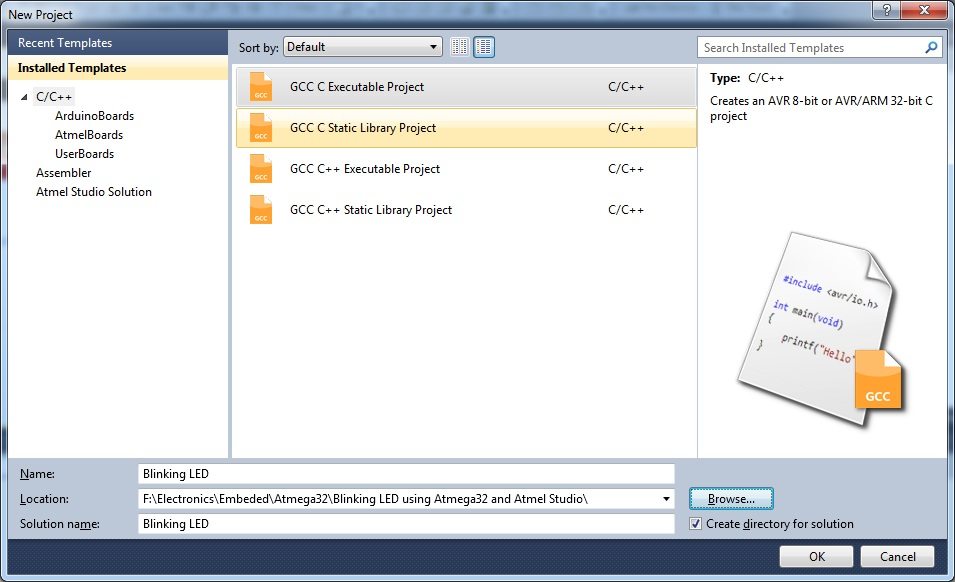
Avr Assembly Code For Led Blinking
Bit 6 – T: Bit Copy StorageThe Bit Copy instructions BLD (Bit LoaD) and BST (Bit STore) use the T-bit as source or destinationfor the operated bit. A bit from a register in the Register File can be copied into T by theBST instruction, and a bit in T can be copied into a bit in a register in the Register File by theBLD instruction. Bit 5 – H: Half Carry FlagThe Half Carry Flag H indicates a half carry in some arithmetic operations.
Half Carry is useful inBCD arithmetic. Bit 4 – S: Sign Bit, S = N ⊕ VThe S-bit is always an exclusive or between the Negative Flag N and the Two’s ComplementOverflow Flag V. Bit 3 – V: Two’s Complement Overflow FlagThe Two’s Complement Overflow Flag V supports two’s complement arithmetics. Bit 2 – N: Negative FlagThe Negative Flag N indicates a negative result in an arithmetic or logic operation.
Bit 1 – Z: Zero FlagThe Zero Flag Z indicates a zero result in an arithmetic or logic operation. Bit 0 – C: Carry FlagThe Carry Flag C indicates a carry in an arithmetic or logic operation.