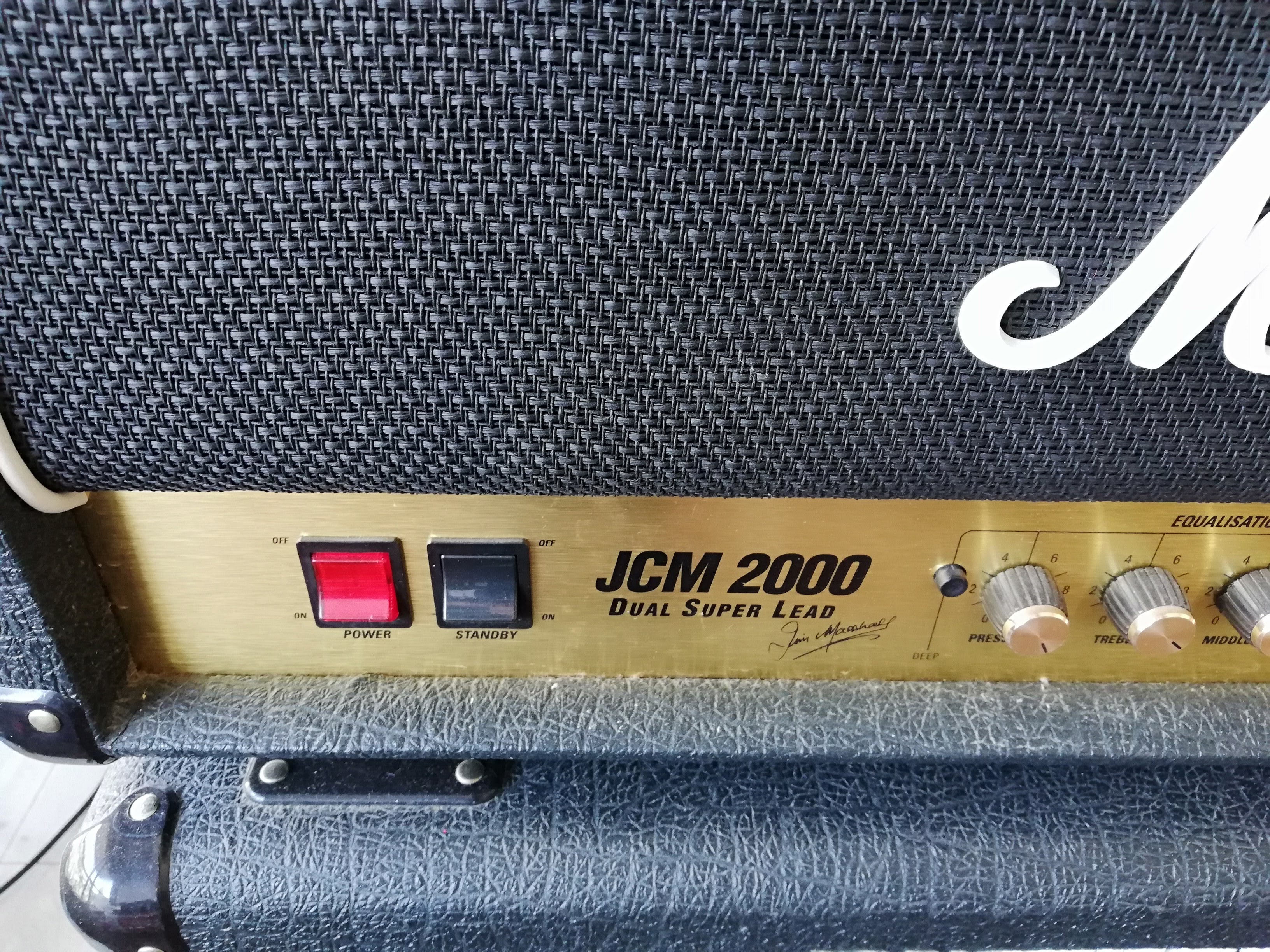
.DSL 100 DSL 50 & Valve Heads.I am proud to say, all of the magical Marshall tone that you could want. The JCM 2000 range is truly a testament to the Marshall legacy of great guitar products.JCM 2000 Introduction The Marshall 1959 Super Lead Plexi head and the JCM 800 Master Volume 2203 are recognised the world over as benchmarks in tone, feel, musical power and sheer size of sound. Imagine then, an amp which is like two footswitchable 1959 Super Leads in one, with the addition of reverb plus extra gain to take you into 2203 territory and beyond.The first, Lead 1, gives an open high gain crunch, operating at a functional temperature but without any sound with traditional Marshall characteristics, similar to a hot- being produced. Rodded JCM 800 2203 master volume. The Lead 2 mode 3.If you have any doubt, please get advice from a 5.
Loop Level qualified person. Your Marshall dealer will help in The loop level on the DSL 100 and DSL 50 can be this respect. Adjusted to match either floor pedals, requiring a low 12.
Rating: 8/10Summary. Good value for your dollar. Versatile - Tweak to taste. Minimal footswitch functionality. $1390 CD list (for new head). $900 CD list (for new 1960-A 412 Cab)Just got my hands on a 2004 signature Marshall Dual Super Lead 50 Watt Head and matching 1960-A cabinet.
Not only is this beast orange but it bears the signature of Jim Marshall across both the head and cabinet. This is a very unique looking amp, with the typical trademark Marshall branding.
Yes indeed it is bright orange, and while it may not scream 'rock star' from a cosmetic perspective, just wait until you crank it up. Besides, having had gear stolen on numerous occasions, the orange styling might make it less appealing to would-be thieves, since there were only 100 of these signature models made.Disclaimer: I'm not going to regurgitate the technical specs on this amp, ifyou want, read the.
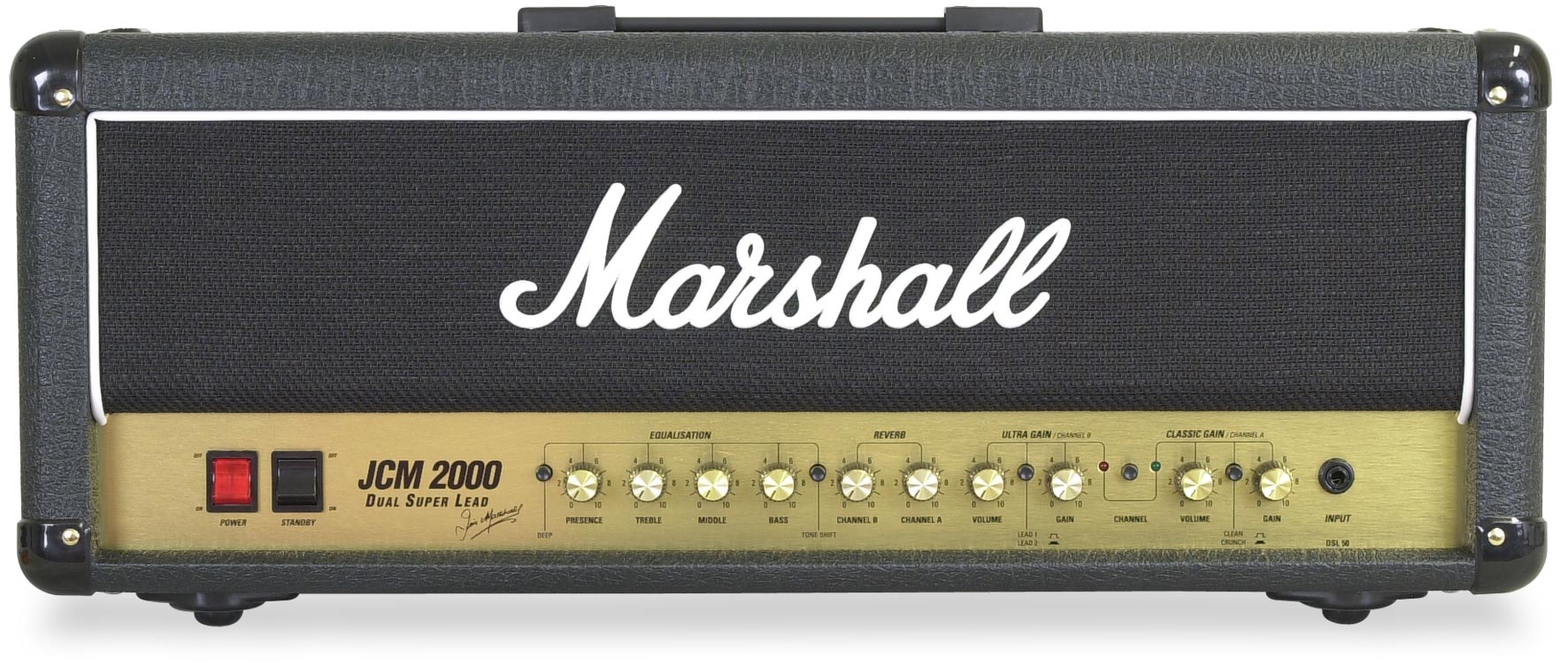
This review is based on my experience and needs. I'm a picky bugger that expects good value for my dollar. OverviewA basic rock'n'roll rhythm/lead two channel amp, no more no less. The EQ is your standard fair with Treble, Mid, Bass and Presence serving both channels. Complementing the EQ is a Tone shift (button) that pulls out the mids if you’re looking for that classic metal sound and a Deep switch (button) that adds a noticeable amount of bottom to the overall tone. The EQ was not as responsive as I would have liked, I found myself actually straining to hear the difference between the mid position of 2 and 6 at low volumes. Regardless, the deep switch when engaged gave me the sound I was after: Bright, responsive with a little angry growl on the low end.The DSL has two channels each with two modes.
The footswitch (included) provides the ability to switch between both channels but unfortunately does not allow for switching between the modes of each channel, which would have been a nice touch, more on this later. Switching between channels results in zero or a barely audible delay to my ears but I'm sure someone with a handy spectrono-nipple-regurgo-graph will call me on it. A seperate footswitch (not included) controls the reverb (on/off) for each channel.Test ConditionsNo mods, factory tubes, out of the box (or used retro music store box). I initially had the EQ set at 7's straight across the board which sounded good, but when playing live at loud volumes I had to pull back the bass to 5 and increase the mid to 8.5. Presence:6 Reverb: 2 for both channels.
Overall there are a squillion variables that will influence tone, anywhere from room size, guitar, volume, pick-up height etc.Classic Gain ChannelIf you’re looking for that 'fat bottom end' this is where you will find it, of course that all depends on your git. I found that even with a bright pickup such as the hot rails, I was able to push some serious air.With the mode set to clean it sounded controlled and lacked that punchy brightness, however by adjusting the EQ you should be able to get an adequate clean sound. But you don’t buy a legendary Marshall for its clean tone; you buy it for that signature distortion that is heard nearly everywhere. One thing I did notice was the big difference in volume from the clean mode to the crunch mode. In a live setting, switching between the clean and crunch mode on this channel, would yield very unsatisfactory results unless you have a very responsive, caring, and loving soundman which is never the case (for me anyways).
Try a bouquet or a fruit basket; refer to last month’s blog 'pampering your sound man'.The Crunch mode definitely delivers; this is a great sounding Rhythm channel. Distortion is tight and the gain range offers up a wide range of possibilities. Marshall compares this mode with the 'JCM 800 2203 style grind'. I concur and then some.I found the crunch mode very responsive, the harder I played (i.e. Picking strength) the more it seemed to growl.If your music/playing style calls for a lot of back and forth between clean and crunch, there are not a lot of options: Its basically down to playing lighter and turning your guitar volume down for less distortion or setting the mode to clean and using a distortion pedal.
Sure you could set this to clean and use the Ultra Gain channel, but your unlikely to get that bottom end unless you add an eq to your effects loop, which with two individual pedals to control ventures very close to rive-dance territory, and we all know how ridiculous that feels and looks. If your style calls for a lot of clean sounds, you may wish to consider something else as it would be a god awful waste of the lovely valve warmth and grind this head offersIf that 'plexi' sound is more to your liking, you can warm up the clean mode by adding some gain. Personally, the crunch mode with a proper serving of gain, is one of the key features of this amp.Ultra Gain ChannelAs much as you want, you can have. If you like that saturated insano level of distortion that doesn't sound artificial this amp delivers.
Marshall compares this to the JCM800 (can anyone say industry standard?)2203 master volume. The lead 2 mode switch pushes out some extra mids, slightly boosts volume and adds an additional layer of gain for even more saturation.With one EQ serving both channels, it will take some work to find a nice compromise between the two. Given the marjority of my playing was with the Classic channel, my eq settings did not have the desired effect when using the ultra gain channel. Fiddle with the eq and find the right balance, if necessary add a seperate eq in your effects loop. Note: Make sure your 'fiddling' is done at stage volume as the tone colour of this amp is definately influenced by volume.For leads, this channel was more than adequate for the typical 'give me way more distortion and volume for my lead' scenario.The Holes in the BackSend and return effects loop has a handy little feature (button) 'loop level'. That allows you to match the levels of floor pedals or effects possessors.There are two footswitch inputs.
Marshall Jcm 2000 Dsl Manual
One for channel switching only (included) and a separate footswitch for reverb (not included). I'm not sure of the logic behind this. A superb and useful idea would have been to include 1 footswitch that would allow switching between channels AND modes AND reverbs. I would have paid extra for this.Three loudspeaker outputs, 16, 8, and 4ohms. Check page 5 of the manual for config options.
Marshall Jcm 2000 Dsl
But for those new to “ohmage”, at a minimum make sure the amp ohmage is lower or equal to your cabinet ohmage, otherwise bad things may happen.OverallThe good: This is a basic yet solid rock machine that should not disappoint you (assuming your expectations are realistic). Again with all reviews they need to be taken with a grain of salt, as every test environment is entirely different from one to the next.Marshall totes the DSL (both 50w and 100w versions) as 'the best selling all valve heads to date' (source Marshallamps.com), and based on my experience with this amp I can understand why.You should be able to get any sound (within reason) out of this amp with a little time spent on setting adjustments, and addition of eq's etc. But then again, that is pretty much the same for all amps.The ugly: Footswitch, Footswitch Footswitch Footswitch.
Marshall Jcm 2000 Dsl 50 Manual For Sale
A footswitch that allows for a player to flip between channels, modes, and separate reverb controls would have been the icing on the cake. Access to the tone and deep shift eq modes would have been over the top. Ok, back to earth, one footswitch for channel selection and one for reverb makes very little sense.Last thing, the volume drop between clean and crunch mode on the classic gain channel is irritating and because of that I likely would never use the clean feature.Good value for the money, but consider adding a stomp box EQ in your effects loop to add more versatility.